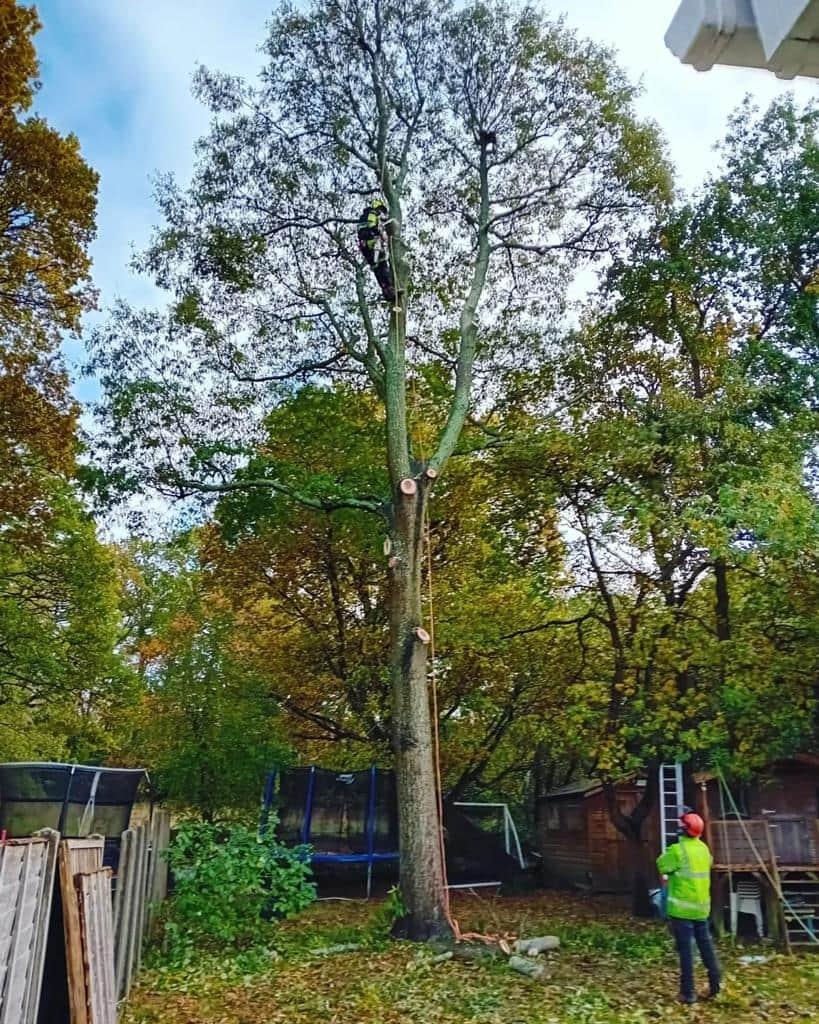
Trees provide valuable benefits to gardens and outdoor spaces, offering shade, privacy and an attractive natural setting. However, there are circumstances when a tree may become unsafe, unhealthy or unsuitable for its surroundings. Recognising the warning signs early can help property owners decide when professional tree surgery advice is needed.
Tree felling is a significant decision and should not be based on appearance alone. Some trees that look unhealthy may still be capable of recovery, while others can have hidden structural problems that are not immediately obvious. For homeowners in Chertsey, Surrey, understanding the signs of potential tree failure is an important part of maintaining a safe and well-managed outdoor space.
What Are the Signs That a Tree May Need to Be Felled?
Several visible changes can indicate that a tree’s health or structural stability is declining. Although these signs do not automatically mean removal is necessary, they should be assessed by a qualified tree surgeon.
Extensive Dead or Dying Branches
A few dead branches are not necessarily a reason to remove an entire tree. However, widespread branch dieback, particularly throughout the crown, may indicate a serious underlying problem.
Look for large sections with no leaves during the growing season, brittle branches and a noticeable decline in new growth. These symptoms can be associated with disease, root damage or prolonged environmental stress.
If the decline is extensive, a professional assessment can establish whether the tree can be managed through pruning or whether felling may be the more appropriate option.
Significant Trunk Damage or Decay
The trunk provides essential structural support, so substantial damage can affect a tree’s stability. Deep cracks, large cavities, areas of missing bark and visible decay may indicate weakened timber.
Fungal growth around the base or trunk can also be a warning sign, as some fungi are associated with internal wood decay. However, identifying the extent of decay often requires specialist knowledge because the visible signs do not always reveal how much of the internal structure has been affected.
Where significant structural weakness is suspected, prompt inspection is important, particularly if the tree is close to buildings, paths or regularly used areas.
Leaning or Changes in the Tree’s Position
Some trees naturally grow at an angle, so a leaning trunk does not automatically indicate a problem. A sudden change in position, however, may suggest root movement or instability.
Other warning signs include raised soil around the base, exposed roots and cracking in the ground near the trunk. These changes can indicate that the root system is no longer providing secure support.
A tree that has recently started leaning should be assessed promptly, especially following strong winds or periods of heavy rainfall.
Root Damage and Poor Tree Stability
Healthy roots anchor a tree and absorb the water and nutrients needed for growth. Damage caused by excavation, construction, compacted soil or decay can affect both stability and overall health.
Signs of possible root problems include:
- Exposed, broken or visibly decaying roots.
- Fungal growth around the base of the tree.
- Soil lifting or cracking near the trunk.
- A decline in the condition of the crown.
- New movement or leaning that was not previously present.
Root damage can be difficult to assess without professional knowledge. A tree surgeon can examine the available evidence and determine whether the tree can remain safely in place.
Serious Disease or Pest Infestation
Certain diseases and pest infestations can gradually weaken a tree, affecting its branches, trunk or root system. Symptoms may include unusual leaf discolouration, premature leaf loss, dead sections of the crown, damaged bark and visible fungal growth.
Not every diseased tree needs to be felled. Some conditions can be managed through targeted pruning or other appropriate tree care. However, where a disease has caused extensive structural deterioration or the tree is unlikely to recover, removal may need to be considered.
Correct identification is essential, as different problems can produce similar symptoms but require different management approaches.
When a Tree Becomes Unsuitable for Its Surroundings
A tree can be healthy but still create practical concerns because of its position or growth. For example, a mature tree may have outgrown the available space, interfere with access or develop branches that place nearby structures and outdoor areas at risk.
Pruning or crown reduction may resolve some of these issues without removing the tree entirely. Felling may be considered when other management options are unsuitable or cannot address the underlying concern.
The decision should take account of the tree’s condition, location and potential impact on its surroundings.
Why Professional Tree Assessments Matter
Deciding whether a tree needs to be felled requires more than identifying a few visible defects. A professional assessment considers the condition of the trunk, crown and root system, along with the tree’s surroundings and any potential risks.
In some cases, pruning, deadwood removal or other tree surgery work may provide a suitable alternative to felling. Where removal is necessary, a qualified tree surgeon can plan the work carefully and carry it out using appropriate methods.
Homeowners in Chertsey, Surrey, should seek professional advice if they notice sudden leaning, significant trunk damage, extensive decay or large dead branches.
Tree Felling Services in Chertsey, Surrey
Knowing when a tree may need to be removed helps property owners make informed decisions about tree safety and long-term garden maintenance. NS Tree Surgery Chertsey can assess trees showing signs of declining health or structural problems and advise on suitable tree surgery options.
Whether you are concerned about a damaged tree or want to understand whether felling is necessary, arranging a professional assessment is a sensible first step.
Conclusion
Dead branches, trunk decay, root damage, sudden leaning and serious disease can all indicate that a tree may need to be felled. However, these warning signs should always be assessed carefully, as some trees can be managed through appropriate pruning and maintenance.
If you have concerns about a tree at your property in Chertsey, Surrey, contact NS Tree Surgery Chertsey to discuss your requirements and arrange professional advice.
Call us on: 01372 679 098
Click here to find out more about NS Tree Surgery Chertsey
Click here to complete our contact form and see how we can help with your tree needs.